Transit-Oriented Development
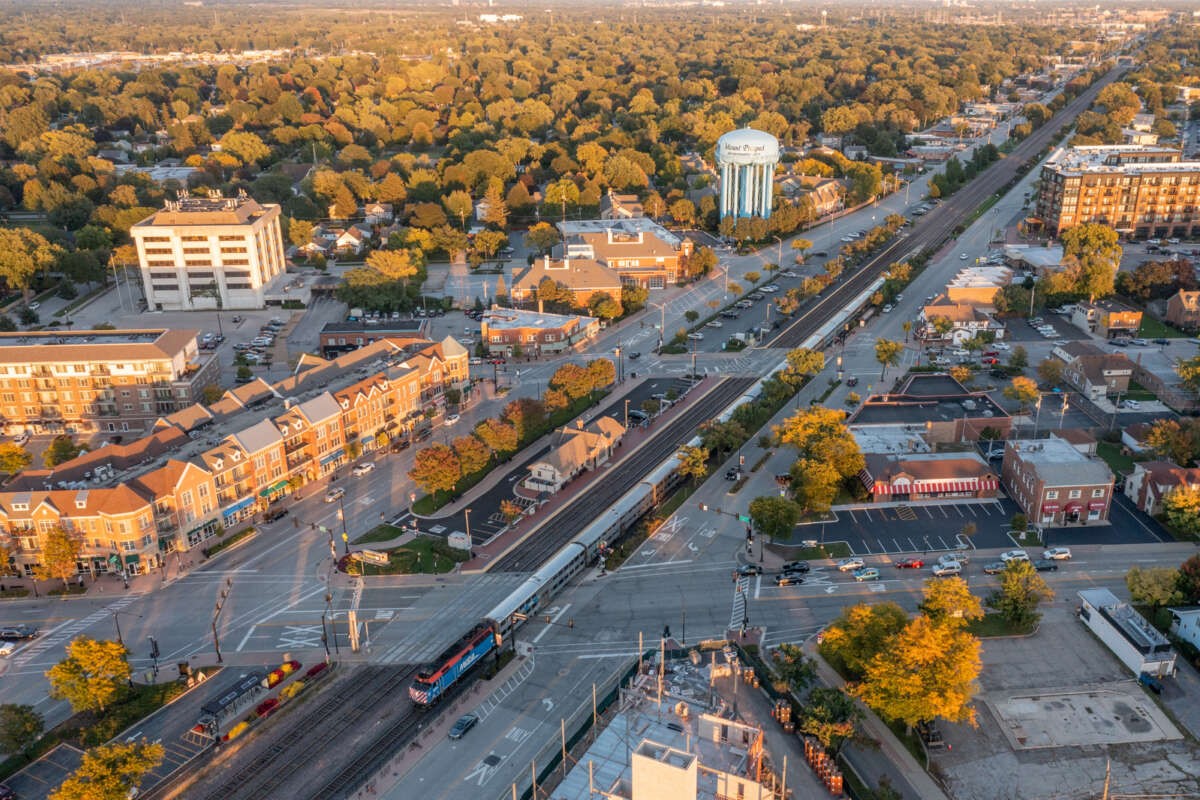
Transit-oriented development (TOD) is a key concept for understanding today’s urban planning landscape. It falls under the broader category of transit-supportive development (TSD), which is the advancement of transport services to the end of encouraging local development. TOD is specifically the simultaneous and reciprocally-supporting development of public transit in tandem with local development, making new urban zones accessible without traditional car-centric infrastructure. Equitable transit-oriented development (eTOD) is even more specifically a form of TOD which ensures that new urban zones are affordable and their jobs accessible to everyone in local communities, encourages community culture, and aims to address displacement caused by development.
These overlapping, yet distinct approaches can be seen in a number of past and current developments in Chicago. The expansion of the Pink Line in 2006 created more transit opportunities to areas already undergoing revitalization (TSD), Mayor Emanuel’s 2019 rezoning plan across eight bus corridors encouraged development and transit use (TOD), and the in-progress Red Line expansion involves connecting new transit developments with looser criteria for development grants and efforts to make up for displacement caused by the destruction of housing (eTOD).
All three of these development strategies present clear pathways for the redevelopment of vacant lots and the mitigation of their negative effects. Arguably, TSD presents some opportunities, TOD presents more, and eTOD presents the most. Let’s imagine an area with a proliferation of vacant lots.
If we institute TSD locally, we can predict that crime rates will drop because local foot traffic will increase. Local presence acts as a kind of ‘public surveillance,’ deterring crime because spectators will be likely witnesses to any criminal activity (this is an “Eyes on the Street” explanation). Moreover, on the “Routine Activity Theory” of crime, a lack of capable guardians makes a spot attractive for crime, but TSD would bring with it informal guardianship (aka the ‘public surveillance’ just mentioned), security guards, and potentially even police presence. However, according to “Broken Windows Theory,” even signs of physical disarray, decay, and destruction can encourage crime. These are not things that TSD directly prevents.
Next, if we ramp up our development to TOD, we can not only mitigate the physical signs that contribute to crime according to the “Broken Windows” explanation, but we can also predict that vacant lots will become attractive for investors. TOD, especially when it focuses on the development of an area and not just individual projects, gives investors a sense of optimism about lots that might otherwise be disregarded, since it is guaranteed that new transit and local development will invariably lead to more commercial success for businesses in the area. Moreover, if we make our TOD equitable, then development will target underserved communities (often the communities with more vacant lots), and will provide more equitable access to new jobs. In urban areas, when new jobs have high barriers for entry, it is often the case that people outside of the immediate region take them instead of locals (“Spatial Mismatch Theory”). But eTOD provides more local employment by opening up its opportunities; this means that development will not only see more commercial success (due to new jobs bringing in new money locally) but also means that we will have fewer motivated offenders for criminal activity (another one of the three required elements in “Routine Activity Theory,” alongside suitable targets).
In all, then, TSD, TOD, and eTOD are three closely-linked, yet importantly distinct tactics of urban development. They each come with their own advantages and challenges, but concerning vacant lots, it is clear that eTOD programs have the most potential to not only develop vacant lots but also mitigate their negative effects, bringing about local employment and reductions in crime.
By Ezra Ellenbogen
Sources:
https://www.transit.dot.gov/funding/funding-finance-resources/transit-oriented-development/benefits-transit-supportive
http://www.tod.org/
https://elevatedchicago.org/about-us/etod/
https://www.chicago-l.org/operations/lines/pink.html
https://www.chicago.gov/city/en/depts/dcd/provdrs/admin/news/2018/december/mayor-emanuel-moves-to-expand-the-city-s-transit-oriented-develo.htm
https://www.transitchicago.com/rle/faq/
https://equilibriumecon.wisc.edu/2024/07/17/eq-vol-14-eyes-on-the-street-testing-jane-jacobs/
https://www.ebsco.com/research-starters/law/routine-activity-theory
https://www.psychologytoday.com/us/basics/broken-windows-theory
https://www.iza.org/publications/dp/693/spatial-mismatch-from-the-hypothesis-to-the-theories
https://metra.com/TOD